That tiny puddle on your kitchen floor. It starts as an innocent nuisance, a mystery you wipe away without a second thought. But when it returns, again and again, always in the same spot by your dishwasher, the culprit becomes clear. A leaky dishwasher door isn’t just annoying; it’s a sign that a crucial component has failed. But before you start pricing out new appliances, take a deep breath. Learning How To Replace Dishwasher Door Seal components is one of the most satisfying and cost-effective DIY repairs you can tackle. It’s a simple fix that can save you a service call and restore your trusty machine to its leak-free glory.
Why Is My Dishwasher Leaking from the Door Anyway?
Before we roll up our sleeves, let’s play detective for a moment. Understanding why it’s leaking helps you confirm you’re on the right track. The rubber or vinyl gasket that runs along the dishwasher’s tub or door frame is your machine’s first line of defense against water escaping. Over time, this seal faces a barrage of hot water, detergents, and food debris. It’s only natural that it eventually gives up the ghost.
Here are the tell-tale signs that your door seal is the problem:
- Visible Damage: Take a close look. Do you see any cracks, tears, or brittle, hardened sections? Is a piece of it hanging loose?
- Discoloration or Mold: A seal that’s constantly damp or has debris trapped in it can become a breeding ground for mildew. This not only looks gross but can also compromise its integrity.
- A Flattened Profile: A healthy seal is supple and creates a tight compression fit when the door closes. An old one might look flattened or compressed, leaving tiny gaps for water to sneak through.
- The Obvious Puddle: Of course, the most common sign is water dripping or pooling at the bottom corners or along the bottom edge of the door, especially during the wash or rinse cycles.
“I always tell my clients, don’t ignore a small leak,” says James Peterson, a veteran appliance technician with over 20 years of experience. “A failing seal not only risks water damage to your floors and cabinets but also makes your dishwasher work less efficiently. It’s an inexpensive part that protects a much more expensive investment.”
Gearing Up for the Job: Prep is Half the Battle
A successful repair project is all about preparation. Rushing in without the right part or tools is a recipe for frustration. Let’s get everything in order first.
Finding the Right Replacement Seal
This is the most critical step. Dishwasher door seals are not one-size-fits-all. You need the exact part for your specific make and model.
- Find Your Model Number: Open your dishwasher door. Look along the inside edge of the door or on the frame of the tub itself. You should find a sticker or metal plate with the manufacturer’s information, including the all-important model number.
- Order the Part: With the model number in hand, you can search online appliance part stores or the manufacturer’s official website. Double-check that the part number you’re ordering is listed as compatible with your model.
Gathering Your Tools
The good news is you don’t need a professional toolbox for this job. You likely have everything you need already:
- The new dishwasher door seal
- A few old towels or rags
- A pair of needle-nose or flat-nose pliers (optional, but helpful)
- Rubbing alcohol or a mild, all-purpose cleaner
- A soft cloth or sponge
A Step-by-Step Guide on How to Replace Dishwasher Door Seal
Alright, it’s go time. We’ve got our part, our tools, and a can-do attitude. Let’s get that old seal out and the new one in.
- Safety First: Kill the Power!
This is non-negotiable. Go to your home’s circuit breaker box and switch off the breaker that controls your dishwasher. You’re working with an appliance that uses both water and electricity, so eliminating any risk is paramount. - Remove the Old Seal
Open the dishwasher door fully. Starting at one of the top corners, grab the old rubber seal and begin pulling it out of the channel it’s pressed into. It should come out with a gentle but firm pull. Work your way all around the perimeter of the tub. If you hit a stubborn spot, you can use your pliers to get a better grip, but be careful not to scratch the dishwasher’s tub. - Clean the Channel Thoroughly
Once the old seal is out, you’ll see the empty channel or groove. Over the years, this channel has likely collected soap scum, mineral deposits, and other gunk. This is the perfect opportunity for a deep clean. Dampen a cloth with rubbing alcohol or a mild cleaner and wipe the entire channel clean. A clean surface will ensure the new seal fits snugly and creates a perfect, watertight barrier. - Install the New Door Seal
Unpack your new seal. Some pros suggest soaking the new gasket in a sink of warm water for about 10 minutes to make it more pliable and easier to work with.- Find the Middle: Most seals have a small mark or notch indicating the top center. Align this with the middle of the top of the dishwasher’s tub channel.
- Press, Don’t Stretch: Starting from the center, use your thumbs to press the seal firmly into the channel. Work your way down one side, then go back to the top and work your way down the other. The key is to press it straight in. Do not stretch the gasket as you install it. Stretching it will make it too long, and it will bunch up or pop out at the bottom.
- Seat It Fully: Make sure the seal is pressed in evenly and sits flush all the way around. It should feel secure in the groove.
Pro Tip: If the new seal feels a little long when you get to the bottom, don’t panic and definitely don’t cut it. It usually means it was stretched slightly during installation. Start over from a corner and focus on pressing it in without pulling it taut.
- The Final Check and Test Run
Close the dishwasher door. You might notice it feels a bit tighter than before—that’s a good thing! It means the new, supple seal is doing its job and creating strong compression. Open and close it a few times to make sure it latches properly.Now, turn the power back on at the circuit breaker. Run a short rinse or quick wash cycle and keep a close eye on the door. Place a dry towel on the floor and watch for any signs of drips. If all is dry, congratulations! You’ve successfully completed the repair.
Beyond the Seal: Pro Tips for a Happy, Healthy Dishwasher
Now that you’ve mastered a key repair, let’s turn you into a true dishwasher whisperer. A little know-how goes a long way in maximizing performance and extending the life of your appliance.
|
Our Picks for the Best Dishwasher in 2026
As an Amazon Associate, we earn from qualifying purchases.
|
||
| Num | Product | Action |
|---|---|---|
| 1 | COMFEE\' Portable Mini Dishwasher Countertop with 5L Built-in Water Tank for Apartments& RVs, No Hookup Needed, 6 Programs, 360° Dual Spray, 162℉ High-Temp& Air-Dry Function |

|
| 2 | HAVA 2025 NEW Upgraded Countertop Dishwasher with Water Softener and Enhanced Energy Efficiency, Portable Dishwasher with 8 Wash Programs, Child Lock & Delayed Start Function, No Installation Needed |
|
| 3 | NOVETE Portable Countertop Dishwashers, Compact Dishwashers with 5L Built-in Water Tank & Inlet Hose, 5 Washing Programs, Baby Care, Air-Dry Function and LED Light for Small Apartments |
|
| 4 | AIRMSEN Portable Countertop Dishwashers, 5 Washing Programs Mini Dishwashers with 5 L Built-in Water Tank and Double-layered Glass Door, No Hookup Needed for Home, Apartments & RVs |
|
| 5 | COMFEE\' Countertop Dishwasher, Portable Dishwasher with 6L Built-in Water Tank, Mini Dishwasher with More Space Inside, 7 Programs, UV Hygiene& Auto Door Open, for Apartments, Dorms& RVs, White |
|
| 6 | COMFEE\' Portable Mini Dishwasher Countertop with 5L Built-in Water Tank for Apartments& RVs, No Hookup Needed, 6 Programs, 360° Dual Spray, 162℉ High-Temp& Air-Dry Function |
|
| 7 | HAVA Countertop Dishwasher with Water Softener and Enhanced Energy Efficiency, Portable Dishwasher with 8 Wash Programs, Child Lock & Delayed Start Function, No Installation Needed - Misty Lilac |
|
| 8 | AIRMSEN Portable Countertop Dishwashers, 5 Washing Programs Mini Dishwashers with 5 L Built-in Water Tank and Double-layered Glass Door, No Hookup Needed for Home, Apartments & RVs |
|
| 9 | HAVA Countertop Dishwasher, 6 Programs Portable Dishwashers with 5L Built-in Water Tank, No Hookup Needed, Baby Care & Air-Drying Function for Apartments and RVs |
|
| 10 | Farberware Portable Countertop Dishwasher with 5-Liter Built-in Water Tank - 5-Program System for Home, RV, and Apartment - Wash Dishes, Glass, and Baby Products |
|
Are You Using Your Dishwasher Correctly?
Believe it or not, there’s a right and a wrong way. Modern dishwashers are incredibly efficient, but they rely on you to do your part.
- Scrape, Don’t Rinse: Today’s detergents have enzymes that are designed to cling to and break down food particles. If you pre-rinse your dishes until they’re sparkling, the detergent has nothing to work on, which can lead to cloudy glassware over time. Just scrape off the large chunks and let the machine handle the rest.
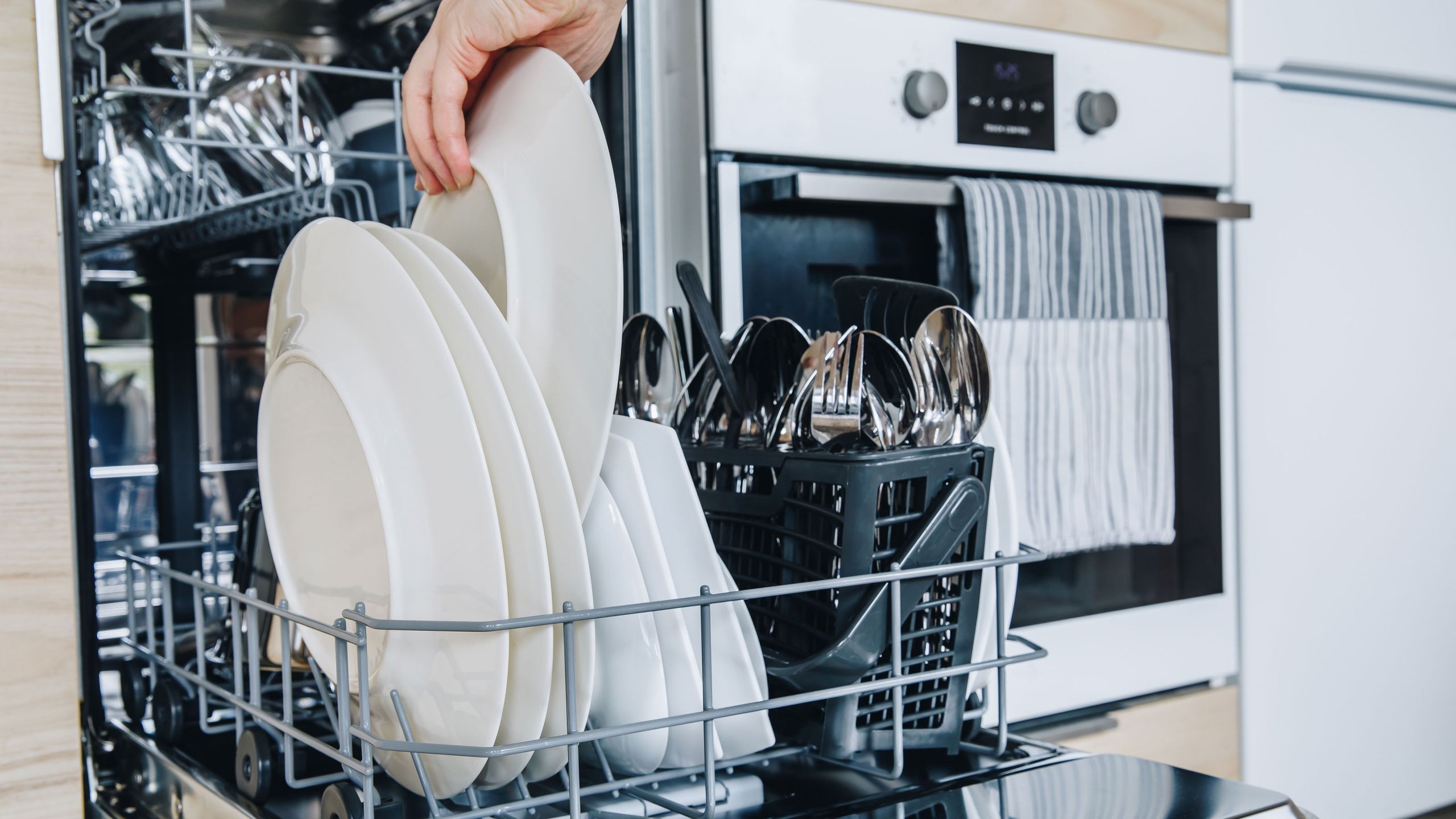
- Load Like a Pro: Don’t block the spray arms! Place larger items on the bottom rack, facing the center. Put plastics and more delicate items on the top rack. Give your dishes some personal space so water and soap can reach every surface.
- Use a Rinse Aid: Especially if you have hard water, a rinse aid is your best friend. It helps water sheet off dishes, preventing spots and improving drying performance significantly.
Simple Maintenance to Prevent Future Problems
Just like a car, your dishwasher needs a little tune-up now and then.
- Clean the Filter: At the bottom of your dishwasher is a filter that catches large food debris. Check and clean it at least once a month. A clogged filter is the number one cause of smelly dishwashers and poor cleaning performance.
- Check the Spray Arms: The small holes in the spray arms can get clogged with food or mineral deposits. Use a toothpick or pin to clear any blockages to ensure a powerful, even spray.
Frequently Asked Questions
Q: How much does a new dishwasher door seal cost?
A: The cost of the part itself is generally very affordable, typically ranging from $20 to $50, depending on the brand and model of your dishwasher. This makes it a very budget-friendly DIY repair compared to a service call fee.
Q: Can I just use glue or silicone to fix my old dishwasher seal?
A: We strongly advise against this. Adhesives are not designed to withstand the high temperatures, moisture, and detergents inside a dishwasher. A temporary patch will likely fail quickly and could even introduce chemicals you don’t want near your dishes. Replacing the seal is the only reliable and safe solution.
Q: How long should a dishwasher door gasket last?
A: With regular use, a dishwasher door seal typically lasts between 5 and 10 years. Its lifespan can be affected by factors like the hardness of your water and how frequently you run the machine. Regular cleaning of the seal can help extend its life.
Q: My dishwasher is still leaking after I replaced the seal. What’s wrong?
A: First, double-check that the new seal is seated properly in its channel all the way around. If the seal is installed correctly, the leak could be coming from another source, such as a cracked spray arm, a loose water inlet valve, or a problem with the tub itself.
Q: Is replacing a dishwasher door seal a difficult DIY job?
A: Not at all! For most people, this is a beginner-level repair that takes less than 30 minutes. It requires no special skills or complex tools, making it a perfect first project for anyone wanting to get more comfortable with home appliance maintenance.
Congratulations on taking control of your kitchen’s hardest-working appliance. By learning how to replace dishwasher door seal components, you’ve not only saved money but also gained valuable knowledge that will help you keep your machine running smoothly for years to come. Now, go enjoy that beautifully dry kitchen floor.