There’s nothing quite like that sinking feeling of opening your dishwasher after a cycle, expecting sparkling clean dishes, only to be greeted by a pool of murky, greasy water at the bottom. It’s a frustratingly common kitchen nightmare. If you’re currently staring at this exact problem and wondering how to fix a dishwasher not draining, take a deep breath. You’ve come to the right place. As the lead expert at Smart Clean Kitchen, I’ve seen it all, and the good news is that this is often a problem you can solve yourself with a little bit of know-how and about 30 minutes of your time.
We’re not just going to patch the problem; we’re going to understand it. This guide will walk you through the troubleshooting process step-by-step, from the simplest checks to the slightly more involved fixes. By the end, you’ll not only have a draining dishwasher but also the confidence to tackle future kitchen appliance hiccups. Let’s roll up our sleeves and get that water flowing where it’s supposed to.
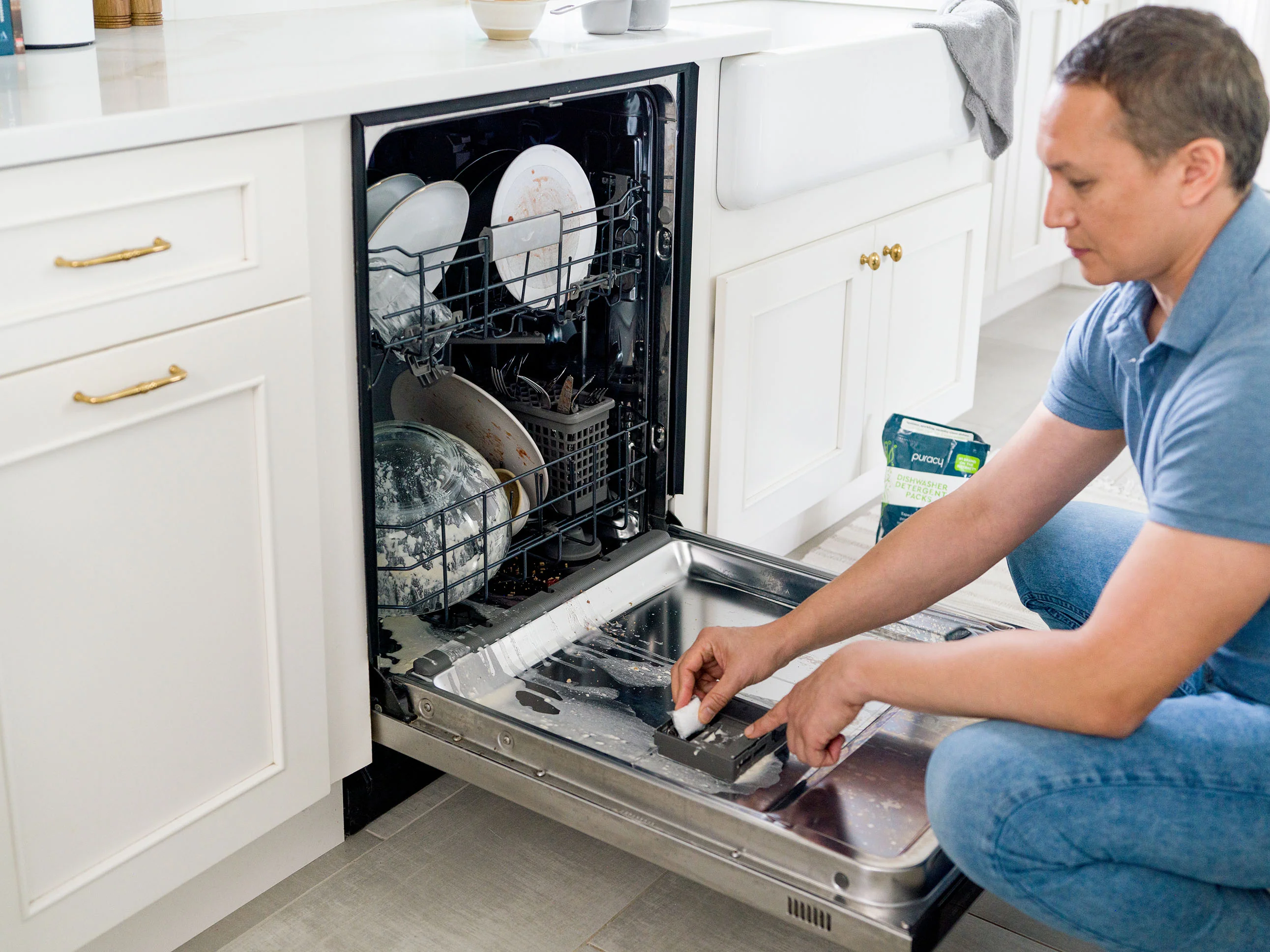
First Things First: Safety and Preparation
Before you even think about reaching into your machine, we need to talk about safety. It’s non-negotiable.
- Disconnect the Power: Go to your circuit breaker and flip the switch that controls your dishwasher. If you’re unsure which one it is, you can turn off the main breaker to be extra safe. Alternatively, some dishwashers are plugged in under the sink; if so, simply unplug it.
- Gather Your Tools: You won’t need much. Grab a few old towels (it might get messy), a shallow pan or bowl to catch water, a pair of pliers, and a screwdriver. A flashlight can also be a huge help.
- Remove the Bottom Rack: Gently pull out the bottom dish rack and set it aside. This gives you a clear workspace inside the dishwasher tub.
Step-by-Step Guide: How to Fix a Dishwasher Not Draining
We’ll work our way from the most common and easiest-to-fix culprits to the less frequent ones. More often than not, you’ll solve the problem in the first two steps.
Step 1: Check Your Garbage Disposal
Is your garbage disposal connected to your dishwasher? For most modern kitchen setups, the answer is yes. The dishwasher’s drain hose typically empties into the garbage disposal unit.
A garbage disposal full of food scraps can easily block the dishwasher’s drain inlet, causing water to back up.
The Fix:
- Before doing anything else, simply run your garbage disposal for about 30 seconds with cold water running. This can often clear the blockage instantly.
- If you’ve recently installed a new garbage disposal, this is a huge one to check. New disposals come with a small plastic plug inside the dishwasher drain connector. This “knockout plug” must be removed during installation. If it was forgotten, your dishwasher has nowhere to drain. You’ll need to disconnect the hose from the disposal and poke out the plug with a screwdriver and hammer.
Step 2: The Infamous Clogged Filter
This is, without a doubt, the number one reason for a dishwasher not draining. The filter is your appliance’s first line of defense against food debris, and it does a fantastic job—until it gets overwhelmed.
Expert Insight from James Peterson, Certified Appliance Technician:
“I’d say 80% of my ‘dishwasher not draining’ calls are resolved by cleaning the filter. People either forget it exists or don’t realize how quickly it can clog with grease, small food particles, or even a stray bit of paper label. Making it a monthly cleaning habit can save you a lot of headaches.”
The Fix:
- Locate the Filter: It’s usually a cylindrical component on the floor of the dishwasher tub, typically in a back corner or near the base of the lower spray arm. It often has a locking mechanism you can turn (usually a quarter or half turn) to release it.
- Remove and Inspect: You’ll likely pull out two pieces: a flat, coarse mesh screen (the lower filter) and a cylindrical, fine mesh piece (the main filter).
- Clean Thoroughly: Take the filter pieces to your sink. Rinse them under warm, running water. Use an old toothbrush and some dish soap to gently scrub away any greasy, slimy buildup and stubborn food particles. You want to be able to see clearly through the mesh.
- Clean the Filter Housing: While the filter is out, use a paper towel or sponge to wipe out the area where the filter sits inside the dishwasher. You’d be surprised what gunk can collect in there.
- Reinstall: Lock the filter securely back into place. It should click or feel firmly seated. A loose filter won’t work correctly and can lead to bigger problems.
After cleaning the filter, try running a “Rinse Only” or “Drain” cycle to see if the problem is solved. For most of you, congratulations are in order!
Step 3: Inspect the Drain Hose
If the filter was clean and the disposal is clear, the next suspect is the drain hose itself. This is the corrugated plastic tube that runs from your dishwasher to the garbage disposal or sink drain pipe.
The Fix:
- Look for Kinks: This is the easiest check. Pull out the dishwasher slightly (if possible) or look under your sink with a flashlight. The hose can easily get kinked or pinched behind the unit or squashed by cleaning supplies. Think of it like a bent straw—nothing can get through. Straighten out any kinks you find.
- Check for Clogs: This is a bit more involved.
- Place towels and a shallow pan under the connection point at the garbage disposal or sink drain.
- Use pliers or a screwdriver to loosen the clamp holding the hose in place and disconnect it. Be ready for some water to spill out.
- With the hose disconnected, place the end in a bucket.
- Take the other end of the hose (where it connects to the dishwasher) and blow through it. If you meet a lot of resistance, you have a clog. You can often dislodge it by carefully using a wire coat hanger (be gentle not to puncture the hose) or by using a combination of hot water and vinegar.
Step 4: Clear the Air Gap
What is a dishwasher air gap? It’s that small chrome cylinder on your countertop near the sink. Its job is to prevent contaminated water from the sink from siphoning back into your clean dishwasher. Like the filter, this little device can get clogged with gunk.
The Fix:
- Remove the Cover: Twist off the metal or plastic cover of the air gap.
- Clean It Out: You’ll see a smaller plastic cap. Pull it off. You can now see the drain lines. Use a paper towel, a small brush, or a piece of wire to clear out any food debris or buildup you find inside.
- Replace the Caps: Put everything back together.
When to Call a Professional
If you’ve tried all of the above and are still facing the dreaded puddle, the problem may be more mechanical. The issue of how to fix a dishwasher not draining might now be beyond a simple DIY clog.
- A Faulty Drain Pump: The drain pump is the motor responsible for forcing water out of the dishwasher. If it’s broken or jammed, the water isn’t going anywhere. You may hear a humming or grinding noise when the dishwasher is supposed to be draining. Replacing a pump is a more complex job best left to a qualified technician.
- Clogged Sump: The sump is the area in the tub that collects water before it enters the drain pump. Sometimes, a piece of broken glass or a small bone can get lodged in there, jamming the pump’s impeller.
- Electrical Issues: In rare cases, the issue could be with the dishwasher’s control board or timer, which isn’t signaling the drain pump to turn on.
Frequently Asked Questions (FAQ)
Q: Can I just pour a chemical drain cleaner like Drano into my dishwasher?
A: Absolutely not. Chemical drain cleaners are extremely harsh and can damage the plastic and rubber components of your dishwasher, like the seals and hoses, leading to leaks and expensive repairs. Stick to the manual cleaning methods outlined above.
Q: How often should I be cleaning my dishwasher filter?
A: For an average family, a quick rinse once a week and a thorough scrub once a month is a great preventative routine. If you notice your dishes aren’t as clean or have a gritty residue, a dirty filter is the first thing you should check.
Q: My dishwasher is making a humming sound but not draining. What does that mean?
A: A humming or buzzing sound during the drain cycle often points to a jammed or failing drain pump. The motor is trying to run but something is either blocking it or the motor itself has burned out.
Q: Why is there standing water in my new dishwasher?
A: If it’s a brand new installation and has never drained properly, the problem is almost certainly the knockout plug in the garbage disposal. Refer back to Step 1.
Q: Is it normal to have a small amount of water in the bottom of the dishwasher?
A: Yes, it is perfectly normal to have a small amount of clean water (usually a cup or two) in the filter area or sump. This is by design to keep the seals from drying out and cracking. A problem exists when you have an inch or more of water covering the entire bottom of the tub.
Conclusion: You’ve Got This!
Dealing with a dishwasher that won’t drain is a major inconvenience, but it’s rarely a sign of a catastrophic failure. By systematically checking the garbage disposal, cleaning the filter, and inspecting the drain hose, you can solve this issue yourself in the vast majority of cases. Knowing how to fix a dishwasher not draining not only saves you money on a service call but also empowers you to better understand and maintain the appliances you rely on every day.
Now that your dishwasher is back in working order, make filter cleaning a regular part of your kitchen routine. A little prevention goes a long way in keeping your smart, clean kitchen running smoothly.